
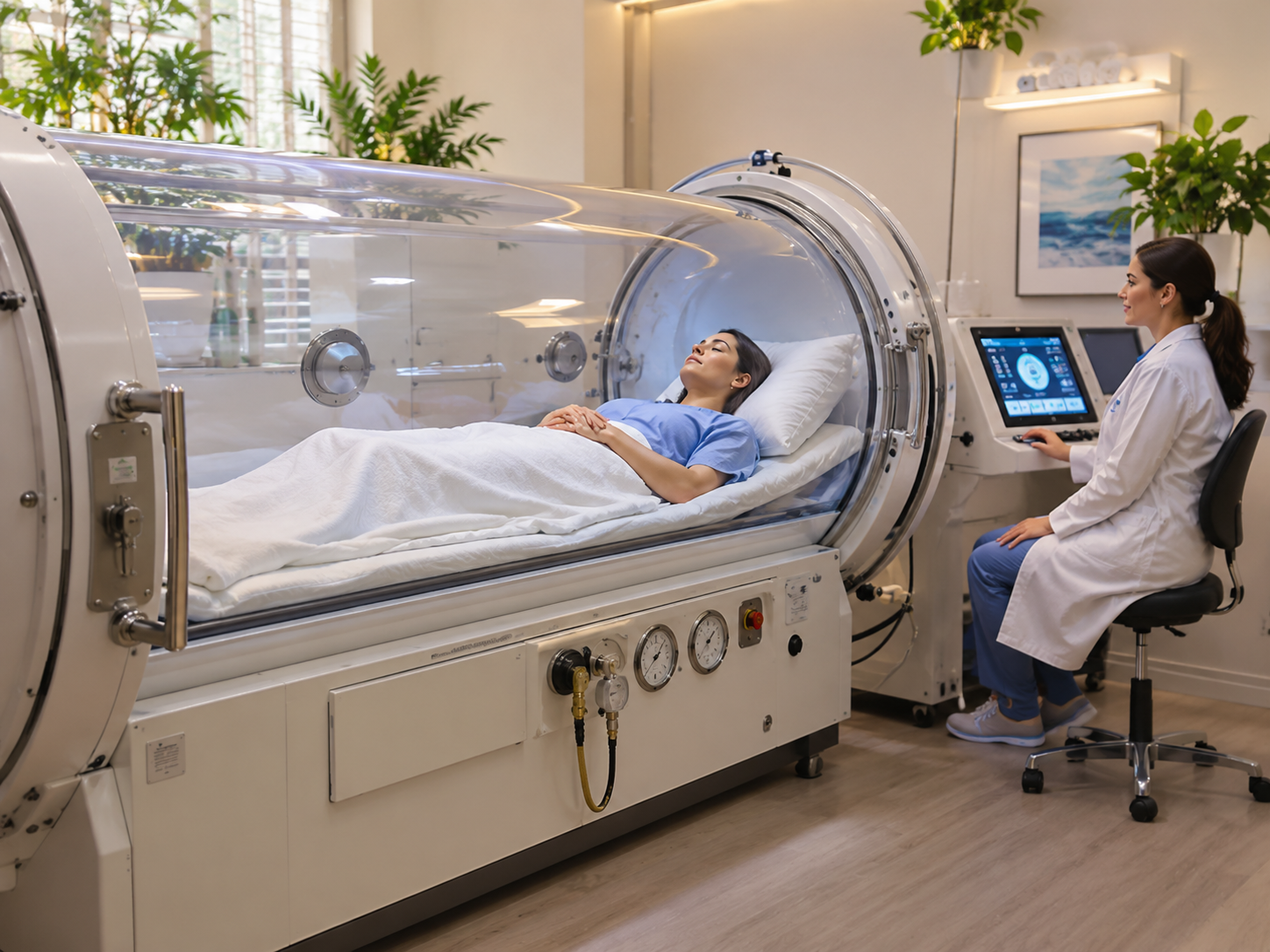
Hyperbaric Oxygen Therapy (HBOT)
A deep dive into how 100% pressurized oxygen targets hypoxia, stimulates stem cells by 800%, disrupts cancer cell mitochondria, and inhibits tumor angiogenesis.
1.How Does Hyperbaric Oxygen Therapy (HBOT) Work?
Normally, when we breathe air, we only get about 21% oxygen.
With HBOT, the oxygen concentration increases to nearly 100%. You are placed inside a pressurized chamber, which helps deliver a much higher amount of oxygen into your blood and body tissues.
The blood then carries this oxygen to different organs, especially tissues that are suffering from hypoxia, which means they are not getting enough oxygen. This can happen because of injuries, infections, trauma or other conditions.
Basically, HBOT helps deliver concentrated oxygen into injured tissues to support healing.
2.Stimulates Stem Cells by 800%
One of the incredible benefits is that HBOT can increase stem cells by up to 800%.
Stem cells are cells that don’t have specific function yet. They can create new, different types of cells depending on what the body needs.
This is why HBOT is an excellent therapy that supports tissue repair and regeneration.
3.Conditions That HBOT Can Help With
HBOT is used for all these conditions below:
4.Effects on DNA and Genes
HBOT also has a profound effect on DNA and gene activity of cancer cells.
To start seeing changes in gene activity, a person may need around 25–35 HBOT sessions over a period of time.
5.Effects on Cancer Cells and Mitochondria
HBOT has the capacity to affect the mitochondria inside tumor cells.
Mitochondria are responsible for producing energy in our cells. Cancer cells have a different type of metabolism. Instead of relying on normal respiratory metabolism, they rely heavily on sugar metabolism (glycolysis).
Because of these metabolic changes, cancer cells continue surviving, growing and dividing instead of dying normally. HBOT can disrupt the mitochondria in tumor cells, making it beneficial to kill cancer cells.
6.HBOT and Angiogenesis
Another important part is angiogenesis. Angiogenesis means the formation of new blood vessels.
Tumors need blood vessels because they require large amounts of oxygen, glucose and nutrients to continue growing. The tumors tend to take up a lot of the body's fuel, especially glucose. Without these new blood vessels, tumors cannot continue surviving and growing.
One of the things that triggers angiogenesis is hypoxia, which means a lack of oxygen. By supplying more oxygen to the tissues, HBOT helps to reduce or inhibit angiogenesis, which destroys tumor growth.
7.How Often Should You Do HBOT?
A typical HBOT session can last around 1–2 hours, approximately three times per week for several weeks.
However, the frequency and number of sessions depend on the person's condition and purpose. For example, someone using HBOT for significant tissue damage may require a different schedule compared with someone using it for maintenance or anti-aging.
8.Where Can You Get HBOT?
There are several ways to access Hyperbaric Oxygen Therapy.
You can search online for an HBOT center near your location, visit a facility that provides the therapy, or speak with your doctor about getting a prescription. Some people also choose to rent or purchase a hyperbaric oxygen chamber for home use.
HOW TO WORK WITH NESA TO BEAT THE CANCER?
If you are a cancer patient or a caregiver who wants to work 1:1 with Nesa, watch our 45-minute video here of how the coaching works: